Buyer guides & news · November 16, 2026
Buying a villa in Koh Samui as a foreigner in 2026
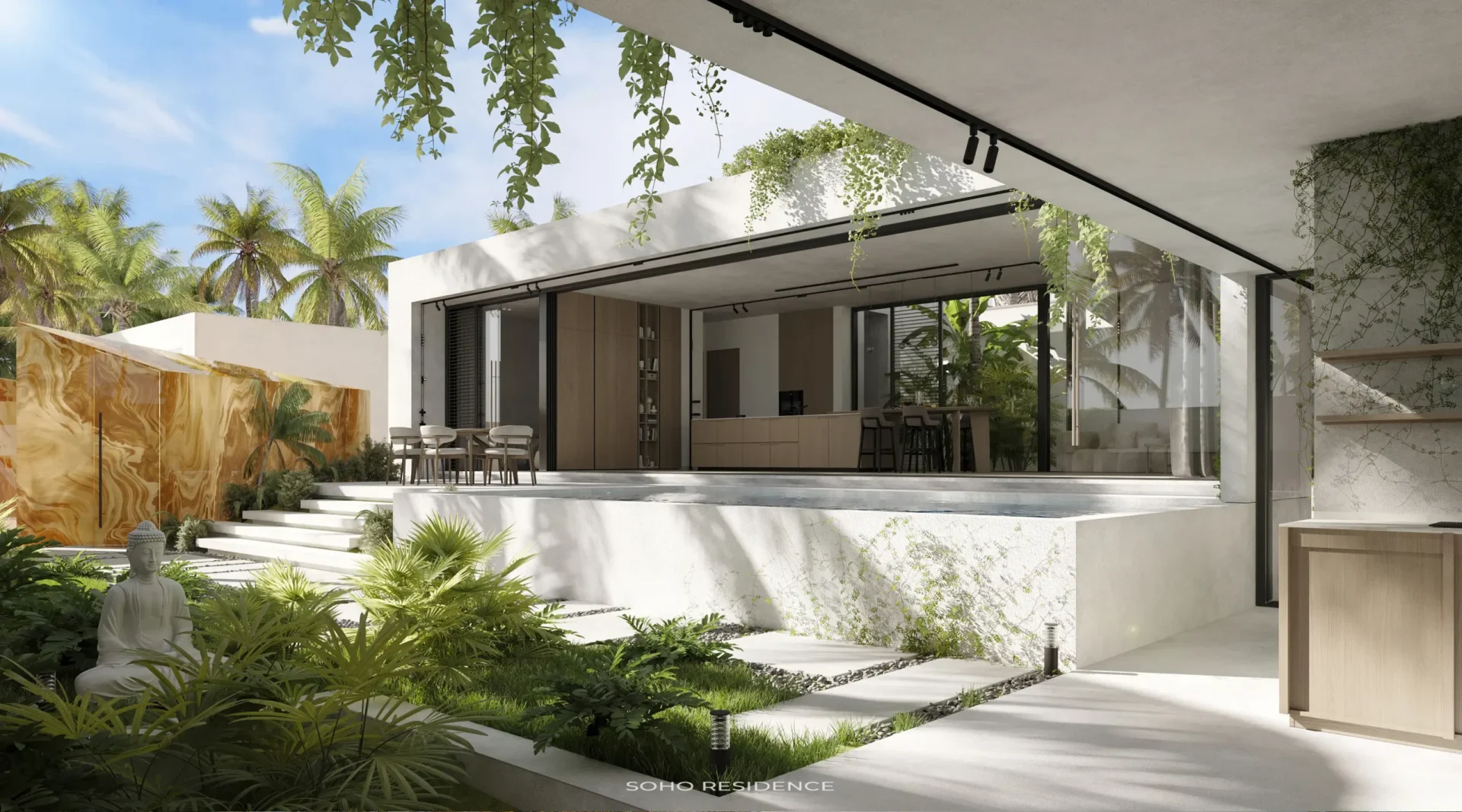
Koh Samui is one of the few places in Thailand where most buyers are looking for a house with a pool rather than a condo. That matters, because Thai law treats land very differently from apartments. This guide sets out how a foreign buyer can hold a villa on the island in 2026, what the main routes cost at the Land Office, and what to check before you sign. It is general information, not legal advice: every purchase should be reviewed by an independent Thai lawyer.
The short answer: foreigners cannot own land, but can lease it and own the house
A foreign individual cannot hold freehold title to land in Thailand. For a villa, the usual structure has two parts:
- A registered land lease in your name. Under the Civil and Commercial Code a lease of land can be registered for a maximum of 30 years at a time.[S1] Registration at the Land Office is what makes it binding on a future owner of the land; an unregistered lease longer than three years is only enforceable for three years.
- Ownership of the building itself. Thai law allows the house and the land to belong to different people, so a foreigner can own the villa structure while leasing the plot underneath. In practice this is done by having the construction permit issued in your name, or by registering the transfer of an existing house.
Many contracts add an option to renew for further 30-year periods (“30+30+30”). Treat those renewals as a contractual promise, not as a registered right: their enforceability is uncertain, and a reported Supreme Court decision in 2025 refused to uphold such a renewal structure.[S2] Price the villa on the first 30 years.
What about the 99-year lease and the 75% condo quota?
Both were proposed by the government in 2024–2025 and widely reported. Neither is law: as of November 2026 the maximum registered lease is still 30 years and the foreign quota in a condominium is still 49%.[S2][S1] Be careful with any sales material that presents a 99-year lease as available today.
Buying through a Thai company
A Thai limited company can own land if it is majority Thai-owned. Using Thai shareholders who only lend their names (nominees) to get around the rule is illegal under the Foreign Business Act and the Land Code, and the Land Office and the Department of Business Development check company structures when land is transferred. A company is a real business with accounts, audits and annual filings; it is not a shortcut for a holiday home. If someone suggests it, ask a lawyer who does not work for the seller.
The alternative: freehold in a condominium
If outright ownership matters to you, a condo unit can be registered in a foreigner’s name as freehold, within the limit of 49% of the total floor area of the building held by foreigners.[S3] The purchase money must come from abroad in foreign currency, and your bank issues a Foreign Exchange Transaction form that the Land Office asks for at transfer. On Koh Samui, condos and serviced apartments exist mostly around Bophut, Chaweng and the north-east coast.
Fees at the Land Office (who pays is negotiable)
- Registering a lease: a registration fee of 1% of the total rent for the whole lease term, plus stamp duty of 0.1%.[S4]
- Transfer of a house or a condo: a transfer fee of 2% of the government appraised value, plus either specific business tax of 3.3% (if the seller has owned it for less than five years) or stamp duty of 0.5%, plus the seller’s withholding tax.
The contract should say who pays each item. In new developments the developer often sets the split in the reservation agreement.
Checks before you sign
- The land title. Ask for a copy of the title deed and check it at the Samui Land Office. A Chanote (Nor Sor 4 Jor) is the strongest title; other documents carry more limits.
- The seller’s right to grant the lease (owner of the land, or a company authorised by its directors) and any mortgage registered on the plot.
- The construction permit and, for a completed villa, the house registration.
- For off-plan villas: the payment schedule tied to construction stages, completion date, penalties for delay, and what happens to your money if the project stops.
- Independent advice: a Thai lawyer of your choice, paid by you, who reads the lease, the building agreement and the title before any deposit beyond a small reservation fee.
Villas we have for sale on Koh Samui today
Every listing below is live on havanoa.com with its own photos, plans and price list on request. Ask us for the title and the tenure of each one before you visit.
- Exclusive 2-Bedroom Villas | Koh Samui — Bo Phut, 2 bedrooms, from ฿12.9M (≈ $380,000)
- Exclusive 3-Bedroom Villas | Koh Samui — Bo Phut, 3 bedrooms, from ฿13.4M (≈ $395,000)
- Luxury 4-Bedroom Villas | Koh Samui — Bo Phut, 4 bedrooms, from ฿14.2M (≈ $418,000)
- Exclusive Villa on Koh Samui | Koh Samui — Bang Rak, 2 bedrooms, from ฿6.9M (≈ $202,000)
- 3 Bedrooms Pool Villa | Koh Samui — Bang Rak, 3 bedrooms, from ฿8.3M (≈ $246,000)
To choose an area first, read our guide to Koh Samui areas for buyers. If you plan to rent the villa out, read the short-term rental rules for villa owners before you buy, and see our villa management in Koh Samui.
General information, not legal advice. Rules as of 16 November 2026. Prices on havanoa.com are shown in Thai baht with an approximate US dollar value and may change.
FAQ
Can a foreigner own a villa in Koh Samui?
A foreigner can own the house but not the land. The land is held through a lease registered at the Land Office for up to 30 years at a time.
Is the 99-year lease available in 2026?
No. It was proposed but has not become law; the maximum registered lease is still 30 years.
Can I buy freehold on Koh Samui?
Yes, in a condominium, within the 49% foreign quota of the building and with funds transferred from abroad in foreign currency.